


Can Kisqali 600mg Tablet Help Control the Progression of Breast Cancer?

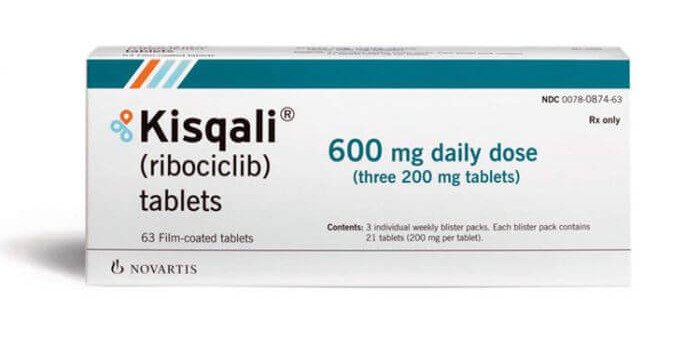
Behaviour of breast cancer may vary according to the presence of certain hormone receptors and other markers in cancer cells. Kisqali 600mg tablet is a targeted drug for cancer treatment which is usually prescribed to patients suffering from hormone receptor-positive (HR positive) and HER2 negative advanced or metastatic breast cancer.
How Does Kisqali Help Control the Progression of Breast Cancer?
The tablet is composed of ribociclib, which is an inhibitor of CDK4/6 enzymes found in cancer cells. This enzyme usually assists in facilitating the passage of cells from one phase to another during the cell cycle. The inhibition of CDK4/6 will then help to decrease the multiplication capacity of the cancer cells. In the case of HR-positive breast cancer, the use of the medicine is usually accompanied by the administration of hormones in order to decrease the hormone stimulation of cancer, and affects the cell division pathway.
What Are the Treatment Benefits of The Tablet?
There are several treatment advantages of Kisqali 600mg Tablet breast cancer treatment if it is used properly in the case of HR-positive and HER2-negative breast cancer:
It inhibits the CDK4/6 pathway, thus hindering cell division and proliferation.
This treatment can contribute to the delay of the disease and progression-free survival of proper patients.
It may be combined with hormonal therapy for a better result outcome.
As opposed to classical chemotherapy, the medicine does not destroy the rapidly dividing cells but targets one of the cancer cells division pathways.
The therapy is usually continued until progression or adverse reactions.
How Is The Medicine Taken?
In advanced or metastatic breast cancer, the medicine is usually initiated at 600 mg orally once daily (3 tablets of 200 mg each) for 21 days, then discontinued for 7 days to make a cycle of 28 days. It can be taken irrespective of meals, and should be swallowed whole without being crushed, chewed or split. The treatment period may vary depending on the response to the drug. It is not all patients that require 600 mg of this medication.
What Are the Common Side Effects of The Medicine?
There is a possibility of experiencing some side effects by the tablet, even though not all patients experience these side effects. Some of the possible side effects include:
Low white blood cell or neutrophil levels
Nausea
Weakness
Diarrhea
Vomiting
Headache
Constipation
Loss of hair
Abnormal results on liver function test
There are some possible side effects that may be more serious, and these include fever or any signs of infections, extreme weakness, jaundice, abdominal symptoms, and abnormal heart rhythm which require immediate medical care.
Conclusion
The tablet is effective for the management of the progression of HR-positive, HER2-negative advanced or metastatic breast cancer as a result of blocking of CDK4/6 and preventing cell proliferation. If taken along with the appropriate hormone therapy, the medicine can be used to delay the progress of the condition. However, the amount and period of the medication need to be individualized, and proper lab work needs to be done.
FAQs
1. Is the medicine capable of stopping breast cancer development?
While the tablet may aid in slowing down the growth of cancer cells, it is not believed to be a surefire cure for cancer development.
2. For how long does Kisqali 600 mg have to be used?
In the case of advanced or metastatic breast cancer, the medicine is taken every 21 days and then has 7 days of break within the 28-day cycle.


Comments